The City of Boston has advanced ICT across the City enterprise dramatically over the last five years. For a more disciplined and consistent approach to planning and operating the technology resources, the City required an increase in Capital Funding and an expanded scope of the organization.
Program Management Office (PMO)
Since the inception of the PMO (2008) the number of projects has grown, and so have the complexities. DoIT, the City of Boston's central entity for management and funding of city technology initiatives, uses CA Clarity as the project portfolio management software to review, manage and prioritize projects. All potential projects are scrutinized by Senior Managers. Starting this year the Project Governance Board, who report directly to the CIO, review Project Ideas for wise City investments, technical feasibility, funding availability in light of all technology needs for the fiscal year, the possibility of an enterprise solution, and resource availability.
DoIT has provided transparency to all of the IT projects by documenting progress and detailed use of funds. This openness helped make a case for increased Capital funding. In 2007 DoIT received a total of $2,750,000 in Capital funds. In 2012 we have seen it increase to $19,500,000.
FY 2013 Recommended Budget - Chief Information Officer Cabinet
The PMO also managed our new location, the renovated Kirstein Business Library, to house major projects. Now called “Project Central,” the facility houses the project teams supporting the Citywide Financials upgrade project, the public safety CAD/Records Management project and the PMO team. This collaborative space is credited with improving the ability of the teams to deliver quality, “on-time, under-budget initiatives."
Shared Services
DoIT created an infrastructure shared services environment as a result of aggressive data center consolidation, virtualization and network activities. The shared services governance group included the ranking IT resource from the Boston Public Schools, Boston Public Library and our DoIT Public Safety CIO. The shared services team extended to application services as our enterprise systems were expanded throughout the City. This year, the shared services team developed an RFP for hosted (cloud-based) email and collaboration services released by the City in early September.
Change Management
As DoIT continues to support and collaborate with other City Agencies and quasi agencies, the IT infrastructure has become more complex and interdependent. It is increasingly critical that DoIT communicates technical plans and changes to ensure continued service delivery. To facilitate communication and to provide ways for technical resources to gain understanding of proposed work scope, Change Management has been used as the vehicle to achieve such goals. Over the past year, the Change Management Group boasts full membership from all agencies. Currently, connecting Change Management and Incident Management ensures a more complete process in responding to incidents and processing changes. Change Management is more visibile during the project management process. The overall accomplishment is that Change Management is now the place where technical resources consult, discuss and understand requirements.
Funding
The City took advantage of changes in the FCC’s e-rate program and became certified as an e-rate provider of services. This allowed the City to leverage the BoNet connections to Boston Public School locations and receive the e-Rate portion of the charge that had previously gone to outside carrier services. This new funding stream is collected and used to invest in the support and enhancement of the City’s network.
Records Management
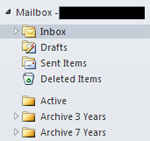 During the last year, DoIT increased awareness of the importance of electronic records management, and in doing so implemented one set of tools for email management. Plans are in the works to deploy a second set of tools for electronic file management. For employees to meet the City’s email management and record retention requirements, as well as the State’s Public Record Law obligations, the City rolled out Email Retention Folders to the majority of City email users. The retention folders are a feature of Symantec’s Enterprise Vault Email Archiving tool (currently in use) which appear in each employee’s Outlook. The folders provide for the proper archiving and retention of email messages in line with the City and State’s requirements. In conjunction with this roll-out, DoIT held over fifty training sessions for City employees to help educate them on the use of the folders, the changes to the system, and their general responsibilities and obligations under the statutes and regulations regarding public records and their disclosure. In the coming months DoIT has plans to roll out Symantec’s File System Archiving tool to the majority of City departments. Already in place for DoIT, FSA provides the same function for electronic files as the retention folders do for email, i.e. the compliant archiving and retention of public records in electronic formats such as PDFs or MS Word documents. Together both the Email Retention Folders and FSA will put DoIT and the City of Boston in a stronger position with regards to meeting the City’s obligations under the State’s Public Record Law and other record retention requirements.
IT Strategic Plan
DoIT is currently engaged in a Strategic Planning effort to develop a roadmap for future year IT objectives and investments. This strategic roadmap will coordinate tightly with the Department’s mission statement, budget decisions and performance targets over the next several years.
- Home
- About DoIT
-
Digital Initiatives

- Awards
- Apps
- Wicked Free Wi-Fi
- Open Data
- Maps
-
Careers
- Internships
- Cable Office
- City Departments