Citywide Financial and Human Resources
Major Upgrade – Citywide Financials
In July 2012, the City launched its upgraded Financial System and added several new modules to its suite. This complex project effectively reengineered several core City business processes. One of the most visible impacts was the initiation of automated bidding and contracting processes, including the introduction of an online supplier portal for vendors. It is our expectation that the supplier portal will encourage competition and transparency; thereby reducing the cost of the goods and services the City procures across the enterprise. Governance structures built into the application also ensure that the City of Boston remains compliant with federal, state and local procurement laws.
The upgrade automated and streamlined day-to-day processes. Implementing eProcurement streamlines the procurement process, especially through Direct Connect, which supports online ordering trough the vendor’s website. Strategic Sourcing provides for the sourcing of goods and services through online bidding. Supplier Contracts manages the entire supplier contract lifecycle online; from authoring, collaboration, execution, and status tracking. The improved Financials ERP allows the City to achieve the goals of the upgrade: leverage state of the art technology to improve operational efficiency and eliminate unnecessary paper.
Enhanced Human Resources System (e-forms)
In the last year the City of Boston implemented an online form framework that has allowed the City to replace paper forms with electronic, work flowed forms which seamlessly update the HCM ERP application once the appropriate approvals are obtained. The introduction of e-Forms has improved The City’s operational efficiency and effectiveness by eliminating manually intensive paper processes, significantly reducing data entry errors, enforcing the standardization, and eliminating delays due to the manual routing of paper documents for approval. The current e-Forms are in place for hiring employees, effecting job changes, and managing positions. The coming year we will be adding new online forms to facilitate the processing of several employee initiated payroll transactions.
Licensing, Permitting and Cash Management
As the City moved aggressively to upgrade its financial systems environment, it also accelerated transition of citywide permit and license activity onto an enterprise permitting environment. Boston Fire Department, Transportation Department, and Public Works were moved to permitting system with its self-service functionality, the city also implemented a new cash management (iNovah) system to streamline collection functions. All these services were supported by Microsoft BizTalk enterprise service bus (ESB) architecture.
Enterprise Asset Management
Enterprise Asset Management (EAM) delivers a comprehensive view of all asset types across city departments. This holistic perspective will allow us to see all of our assets, as well as identify all of the untapped potential within them. The City will gain the knowledge and control needed to closely align its organization's goals with the overall goals of its business. To help maximize return on assets, EAM will enable us to develop comprehensive programs for preventive, predictive, routine and unplanned maintenance. The City hopes to realize the following advantages from deployment of EAM across the Enterprise:
- Improve return on assets,
- Decrease costs and risk,
- Increase productivity,
- Improve asset-related decision making,
- Increase asset service delivery responsiveness and revenue,
- Facilitate regulatory compliance efforts, and
- Lower total cost of ownership.
EAM has been implemented in the Boston Fire Department (BFD) and the Street Lighting Division of the Public Works Department (PWD). A spatial component will also be implemented to provide integration between the City’s GIS and EAM. This will help PWD plan, schedule and perform work more effectively. Currently we are working on tagging each street light captured in the flyover data last year to the appropriate streetlamp number used by PWD so there will be a one to one relationship between the spatial asset and the asset in EAM. An interface to CRM was also included to leverage the existing capacity of CRM to receive external service requests for street light related issues. This is a two way interface to ensure that the public have a continuous feedback loop and know the current status of the service request they submitted. In recent months we have implemented a mobile solution for PWD Street Light supervisors who can now receive Work Orders in the field and can enter and track actual hours worked and materials used in the field.
Early this summer EAM was implemented at the School Department (BPS), Community Centers (BCYF) and Property and Construction Management Division (PCMD). A portal was built to allow secretaries and principals to submit service requests for their school facilities directly into EAM. An interface was built with our financial system so that a Work Order with an associated request for services could have that Purchase Requisition sent directly to the financial system for processing. Similarly a final dispatched Purchase Order in the financial system could be pushed back to the EAM so a record of the actual cost associated with the Work Order, and ultimately the asset could be maintained.
Boston Public Schools (BPS) – School Choice
Today’s student assignment system was created in 1988. In the generation since, our city has changed and school quality has improved. This school choice model is hard for parents to navigate and ripe for review. BPS is working to improve school choice and student assignment. One step of this process is the development of school choice ‘models.’ The models represent several ideas for how to improve choice, equity and opportunity while strengthening our community’s ability to support all public schools.
One of the challenges BPS faced was how to allow parents and constituents the ability to investigate and compare these models as well as provide feedback to decision makers. We needed a model to help display progress as the conversation changed from model development to full policy implementation. A combination of GIS map tools and surveys was deployed to gather feedback from parents and constituents.
View Map Model
Boston School Choice
City Worker
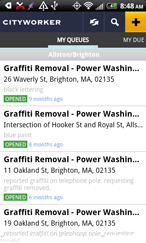
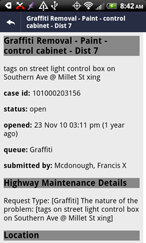
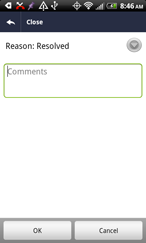
City Worker, an in-house, internal mobile application, helps employees manage real-time constituent requests for basic city services, as well as create new cases in the City’s work order management (WOM) system for internally-identified problems. By implementing this platform we have provided service-oriented departments the tools they need to address critical constituent needs in a more cost effective, efficient, and timely manner. This change in approach leads to improved performance and accountability, real taxpayer savings, and helps build citizen confidence in our services. So far, city workers have logged 2,900 requests since we launched the application. This high adoption rate by city workers shows internal buy-in has been successful; the application also has increased worker productivity and improved service delivery targets.
Application Screenshots
Microsites
We increasingly find our Enterprise Web CMS is no longer a catch-all solution when it comes to supporting City initiatives online. We heard the various departments’ problems: the City site was not design appropriate, the CMS was complicated or didn’t offer enough dynamic functionality or they wanted a standalone web presence separate from CityofBoston.gov, especially when non-City agencies were involved with the initiative. WordPress would become the candidate to power these microsites. With numerous themes and plugins, WordPress offered the ability to build microsites rapidly and reliably, with extra functionality when needed.
We have deployed a Wordpress environment (one web server and one database server) so departments would not have to go outside the institution to find a web host. By hosting City-sponsored Wordpress sites in-house, DoIT is able to manage and oversee Wordpress site development and cost-savings result from departments not having to pay for hosting. To quickly install a Wordpress site, we utilize A PERL script that automates the installation process. It allows the Web Team to bring up a site in mere minutes. We then hand off to the department for content and site maintenance. This process has been very well received. The environment now hosts about 20 Wordpress sites, with a variety of different themes, widgets, and purposes.
Site Examples:
- Home
- About DoIT
-
Digital Initiatives

- Awards
- Apps
- Wicked Free Wi-Fi
- Open Data
- Maps
-
Careers
- Internships
- Cable Office
- City Departments